
Blog
FE Meaning Text: Complete 2026 Guide to Its Definitions, Social Media Uses, Slang, and Online Conversations

The abbreviation “FE” is commonly used in text messages, social media posts, online chats, gaming communities, and professional communication. Because abbreviations often have multiple meanings depending on the context, many people search for “FE meaning text“ to understand exactly what someone intended when using it.
In casual conversations, FE can represent different phrases, technical terms, or abbreviations. Its meaning often depends on the platform, the topic being discussed, and the relationship between the people communicating. Whether you encountered FE on TikTok, Instagram, Snapchat, Facebook Messenger, WhatsApp, Discord, X (formerly Twitter), or in workplace conversations, understanding the surrounding context is the key to interpreting it correctly.
This comprehensive 2026 guide explains the most common meanings of FE in text, where it is used, examples of conversations, internet slang interpretations, technical definitions, and frequently asked questions.
What Does FE Mean in Text?
The abbreviation FE has multiple meanings, and there is no single universal definition. Instead, its interpretation changes based on the conversation.
Some of the most common meanings include:
- For Example (occasionally used as a shorthand in informal writing)
- Front End (technology and web development)
- Fire Emblem (gaming community)
- Further Education (education-related discussions)
- Iron (Fe) (scientific or academic contexts)
- Female (used in some online communities or forms)
- Friend Edition or other personalized abbreviations in private chats
When reading a message, consider the topic before deciding which meaning fits best.
FE Meaning in Social Media and Text Messaging
In everyday texting and social media, abbreviations are often used to save time and make conversations faster. While FE is less common than terms such as LOL, BRB, or IMO, it still appears across many platforms.
Informal Conversations
Friends sometimes use FE as a personal shorthand that only members of a particular group understand.
Example:
Person A: “Let’s use the FE version.”
Person B: “Sounds good.”
In this example, the exact meaning depends entirely on the conversation.
Technology Discussions
Developers frequently use FE to mean Front End, referring to the user interface of a website or application.
Example:
“The FE needs updating before launch.”
Here, FE clearly means Front End.
Gaming Communities
Among gamers, FE often stands for Fire Emblem, the popular tactical role-playing game series.
Example:
“I’m replaying FE this weekend.”
Gamers immediately recognize this as a reference to Fire Emblem.
Common Meanings of FE Across Different Industries
One reason FE meaning text generates so many searches is that the abbreviation is used in numerous fields.
Technology
FE = Front End
Refers to the visual part of websites and applications that users interact with.
Education
FE = Further Education
Commonly used in countries such as the United Kingdom when discussing education after secondary school.
Science
Fe = Iron
In chemistry, Fe is the official chemical symbol for iron, derived from the Latin word ferrum.
Engineering
FE may refer to Fundamentals of Engineering, an important professional examination in several countries.
Gaming
Many gaming communities recognize FE as Fire Emblem, Nintendo’s long-running strategy game franchise.
Understanding the topic of discussion helps determine which definition is correct.
How to Identify the Correct Meaning of FE
Because abbreviations can have multiple interpretations, context is essential.
Here are several tips:
Look at the Conversation
Is the discussion about technology, education, gaming, or science?
Identify the Platform
Professional platforms often use technical meanings, while messaging apps may use informal slang.
Consider Previous Messages
Earlier parts of the conversation usually provide clues.
Know the Audience
Friends may create personalized abbreviations that differ from standard internet meanings.
Ask for Clarification
If you’re uncertain, asking “What do you mean by FE?” avoids misunderstandings.
Why Internet Abbreviations Like FE Are So Popular
Digital communication has evolved dramatically over the past decade. People now exchange billions of messages every day, making speed and convenience increasingly important.
Abbreviations such as FE remain popular because they:
- Reduce typing time
- Make conversations faster
- Save space in messages
- Create community-specific language
- Simplify technical communication
- Reflect modern internet culture
As online communication continues evolving in 2026, new abbreviations will continue appearing alongside well-established ones.
Examples of FE in Real-Life Conversations
Understanding examples helps clarify how FE is used.
Technology
Developer: “The FE is finished. Now we can start backend testing.”
Meaning: Front End
Education
Student: “I’m applying for FE courses next semester.”
Meaning: Further Education
Gaming
Friend: “Which FE game should I play first?”
Meaning: Fire Emblem
Science
“The sample contains a high concentration of Fe.”
Meaning: Iron
These examples demonstrate why context is essential when interpreting abbreviations.
Conclusion
Understanding FE meaning text requires paying attention to the context, platform, and topic of the conversation. While FE may represent Front End in technology, Further Education in academic discussions, Fire Emblem in gaming, or Iron (Fe) in science, the surrounding message usually makes the intended meaning clear.
As digital communication continues evolving throughout 2026, abbreviations like FE will remain an important part of texting, social media, online communities, and professional communication. Knowing the different interpretations helps prevent misunderstandings and allows users to communicate more effectively across a wide range of digital environments.
Whether you’re chatting with friends, studying, working in technology, or participating in online gaming communities, recognizing the various meanings of FE will make modern communication easier and more accurate.
Frequently Asked Questions About FE Meaning Text
What does FE mean in text messages?
It depends on the context. Common meanings include Front End, Further Education, Fire Emblem, Iron (Fe), or other conversation-specific abbreviations.
Is FE internet slang?
Sometimes. In casual messaging, people may use FE as a personalized abbreviation, while in professional settings it usually has technical meanings.
What does FE mean in technology?
In software development, FE almost always stands for Front End, referring to the user-facing part of a website or application.
What does Fe mean in chemistry?
Fe is the official chemical symbol for iron on the periodic table.
Why does FE have multiple meanings?
Like many abbreviations, FE is used in different industries and communities, so its definition depends on the surrounding conversation.
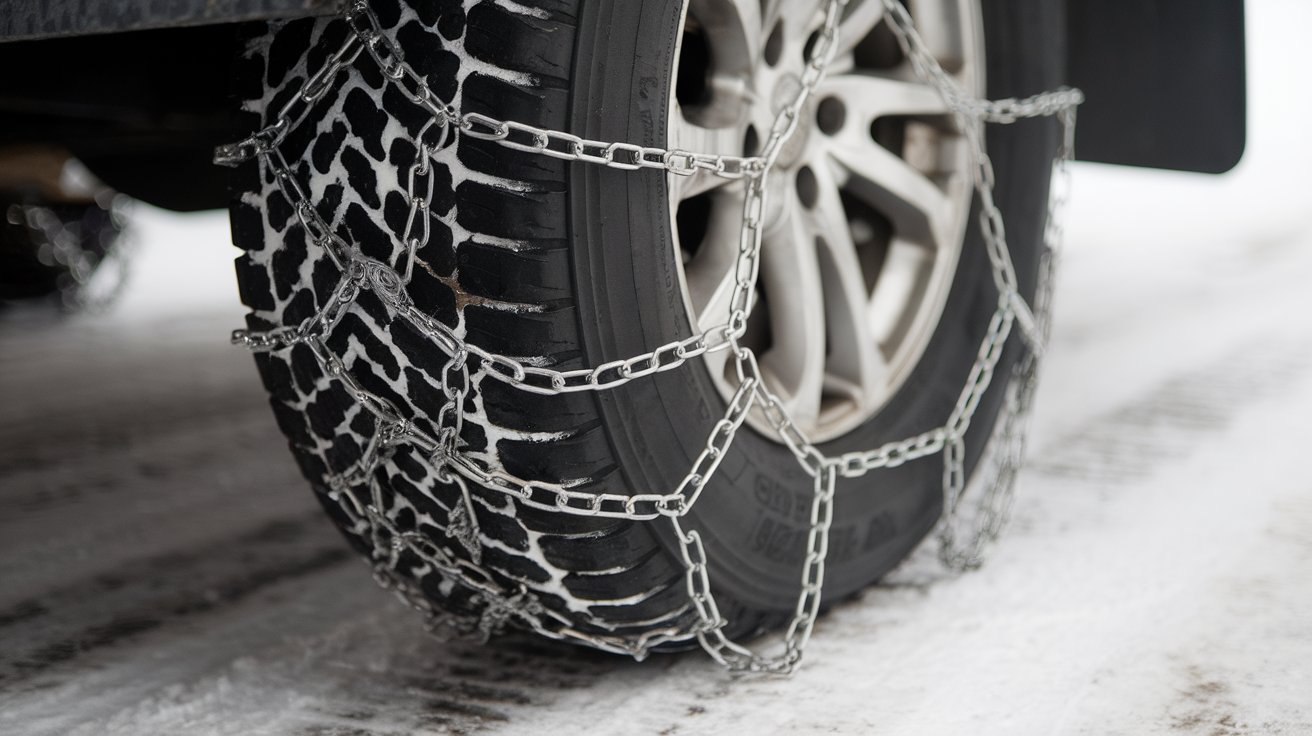
Driving in snow, ice, and winter conditions can become challenging even for experienced drivers. Traditional snow chains can improve traction, but installing them beside a cold roadside is often inconvenient and time-consuming. Snow Chains Automatic offer an alternative by allowing traction devices to be engaged from the vehicle rather than requiring the driver to manually fit conventional chains around the tires.
These systems are particularly useful for commercial trucks, buses, emergency vehicles, delivery fleets, and other vehicles that regularly encounter changing winter conditions. Instead of stopping to install conventional chains, an automatic system can deploy traction elements against the tire when additional grip is needed.
In 2026, understanding how automatic snow chains work, where they are useful, and what their limitations are can help drivers and fleet operators make better decisions about winter traction.
What Are Snow Chains Automatic?
Snow Chains Automatic are vehicle traction systems designed to provide additional grip on snow- and ice-covered roads while allowing the driver to activate or deactivate the system from inside the vehicle.
Unlike conventional tire chains, which are physically wrapped around the tire, automatic systems generally use a series of rotating traction components positioned near the drive wheels. When activated, these components contact the tire and create additional traction between the tire and slippery road surface.
The exact design varies by manufacturer, but many systems use a rotating disc or wheel with traction elements that deploy underneath the tire as the vehicle moves.
The major advantage is convenience. A driver may be able to activate the system without leaving the cab, making it particularly valuable when road conditions change unexpectedly.
However, automatic snow chains should not be considered a universal replacement for conventional chains. Compatibility, road conditions, vehicle type, system design, and local regulations all need to be considered.
How Do Automatic Snow Chains Work?
The basic principle behind an automatic snow-chain system is relatively straightforward.
A traction assembly is mounted close to the vehicle’s drive tires. When the system is disengaged, the traction components remain positioned away from the tire’s normal contact path.
When the driver activates the system, the assembly moves into a position where traction components contact the rotating tire. As the wheel turns, the traction elements repeatedly come into contact with the road underneath the tire.
This provides additional grip on slippery surfaces.
Many systems are designed to be engaged and disengaged while the vehicle is moving, although the permitted speed and operating conditions depend on the specific product. Some systems use pneumatic activation, while others employ different mechanical or electrical arrangements.
The important point is that automatic systems are designed for rapid deployment. The driver does not necessarily need to stop, exit the vehicle, kneel beside the tire, and manually install a chain.
This can save valuable time and reduce exposure to cold, snow, traffic, and roadside hazards.
Benefits of Automatic Snow Chains
One of the biggest advantages of automatic snow chains is convenience. Conventional chains can be difficult to install correctly, particularly when snow is falling or visibility is poor. Automatic systems can substantially reduce the need for roadside installation.
Another benefit is rapid activation. Winter road conditions can change within a short distance. A road that appears clear may suddenly become icy or covered with packed snow. Having a system that can be activated from the driver’s position can provide an important operational advantage.
Automatic systems can also be valuable for commercial fleets. Trucks and buses may travel long distances through areas where winter traction requirements change frequently. Reducing installation time can help minimize delays.
Additional potential advantages include:
- Quick deployment
- Reduced roadside exposure
- Convenient operation for fleet drivers
- Useful for repeated winter travel
- Reduced need for manually fitting traditional chains
- Potentially easier operation for large commercial vehicles
- Ability to disengage when traction assistance is no longer needed
For businesses, reduced downtime can be especially important. A fleet vehicle that spends less time stopped for traction equipment may be able to maintain a more efficient route schedule.
Automatic Snow Chains vs. Traditional Snow Chains
The choice between automatic snow chains and conventional chains depends on the vehicle and driving conditions.
Traditional snow chains provide a large amount of traction when correctly installed and are widely used for severe winter conditions. However, installation can be physically demanding and usually requires the vehicle to stop.
Automatic systems prioritize speed and convenience. Their ability to deploy quickly makes them attractive for vehicles that encounter intermittent snow or ice rather than continuously driving through deep winter conditions.
There are also differences in design and cost. Automatic systems typically require vehicle-specific hardware and professional installation, while conventional chains can often be purchased separately and installed by the vehicle owner.
Another important consideration is legal compliance. In some areas, authorities may specify particular types of traction devices during chain-control periods. An automatic traction system should never be assumed to satisfy every chain requirement simply because it provides additional traction.
Before traveling through a region with winter chain laws, we should check the applicable regulations and confirm whether the specific system is approved.
How to Choose the Right Automatic Snow Chain System
Choosing the right system requires more than simply checking the tire size. We should first determine whether the system is compatible with the vehicle’s drivetrain, wheel configuration, tire dimensions, suspension, and available mounting space.
The system should also be appropriate for the vehicle’s intended use. A light-duty vehicle may have very different requirements from a heavy commercial truck or bus.
Important factors include:
Vehicle compatibility: Confirm that the manufacturer specifically supports the vehicle.
Tire size: The system must accommodate the exact tire specifications.
Drive wheels: Determine which wheels require the traction system.
Operating speed: Check the manufacturer’s specified activation and maximum operating speeds.
Traction requirements: Consider whether the vehicle operates in occasional snow, frequent mountain conditions, or severe winter environments.
Installation requirements: Some systems require specialized mounting and professional installation.
Durability: Commercial users should consider how frequently the system will be deployed and how much road exposure it will receive.
We should also examine replacement-part availability, maintenance requirements, warranty coverage, and manufacturer support before purchasing.
Are Automatic Snow Chains Safe?
When properly selected, installed, and operated according to the manufacturer’s instructions, automatic snow chains can be an effective winter traction aid. However, they do not eliminate the risks associated with driving on snow or ice.
The driver still needs to adjust speed and following distance to road conditions. Traction equipment cannot compensate for excessive speed, sudden steering, hard braking, or poor visibility.
Automatic systems also have limitations. Their performance may vary depending on snow depth, ice conditions, road surface, vehicle configuration, and system design.
Drivers should never assume that activating a traction system means the vehicle can travel at normal dry-road speeds.
We should inspect the system regularly and stop using it if components appear damaged, excessively worn, loose, or improperly positioned.
Maintenance and Common Problems
Like other vehicle equipment, automatic snow chains require inspection and maintenance.
Before winter, inspect mounting hardware, traction components, activation mechanisms, hoses or wiring where applicable, and other visible components. Follow the manufacturer’s recommended maintenance schedule.
Common issues can include worn traction elements, damaged mounting components, activation problems, or debris interfering with the system.
A system that has been exposed to salt, moisture, gravel, and repeated winter use should receive particular attention.
Fleet operators can benefit from including automatic snow-chain inspections in their regular preventive-maintenance program. Drivers should also report unusual noises, vibration, incomplete deployment, or other changes in operation.
Proper maintenance helps ensure that the system is available when winter conditions actually require it.
Final Thoughts on Automatic Snow Chains in 2026
Snow chains Automatic provide a convenient approach to winter traction, particularly for commercial vehicles and drivers who regularly encounter changing snow and ice conditions. Their ability to deploy without the traditional roadside installation process can save time and reduce exposure to harsh winter weather.
Nevertheless, they are not a substitute for responsible winter driving. We should select a system that is compatible with the vehicle, correctly installed, properly maintained, and legally permitted in the areas where it will be used.
For drivers and fleet managers, the best winter strategy combines appropriate traction equipment with proper tires, cautious driving, regular maintenance, and awareness of changing road conditions.
When those elements work together, automatic snow chains can become a valuable part of a 2026 winter driving and fleet-safety strategy.

When we ask “how long is 10 inches?”, the simplest answer is 10 inches = 25.4 centimeters. It is also equal to 254 millimeters, 0.254 meters, and approximately 0.833 feet. Because an inch is defined as exactly 2.54 centimeters, the conversion from 10 inches to centimeters is precise rather than an estimate.
Although the mathematical conversion is straightforward, many people want to know what 10 inches actually looks like in real life. A numerical measurement does not always provide an intuitive sense of size. By comparing 10 inches with rulers, paper, tablets, plates, books, and other familiar objects, we can develop a much clearer understanding of this length. This guide explains how long 10 inches is, how to convert it into other units, how to visualize it, and why the measurement can mean different things depending on the object being measured.
How Long Is 10 Inches in Centimeters, Millimeters, Feet, and Meters?
The most important conversion to remember is that 10 inches equals exactly 25.4 centimeters. We get this result by multiplying 10 by the exact conversion factor of 2.54 centimeters per inch.
| Measurement | Equivalent |
|---|---|
| 10 inches | 10 in |
| Centimeters | 25.4 cm |
| Millimeters | 254 mm |
| Meters | 0.254 m |
| Feet | 0.8333 ft |
| Yards | 0.2778 yd |
The calculation is simple:
10 × 2.54 = 25.4 centimeters
For meters, we divide 25.4 centimeters by 100, giving 0.254 meters. Since one foot contains 12 inches, 10 inches is 10 ÷ 12 = 0.8333 feet. These conversions are particularly useful when we are comparing products or measurements that use different systems.
What Does 10 Inches Look Like in Real Life?
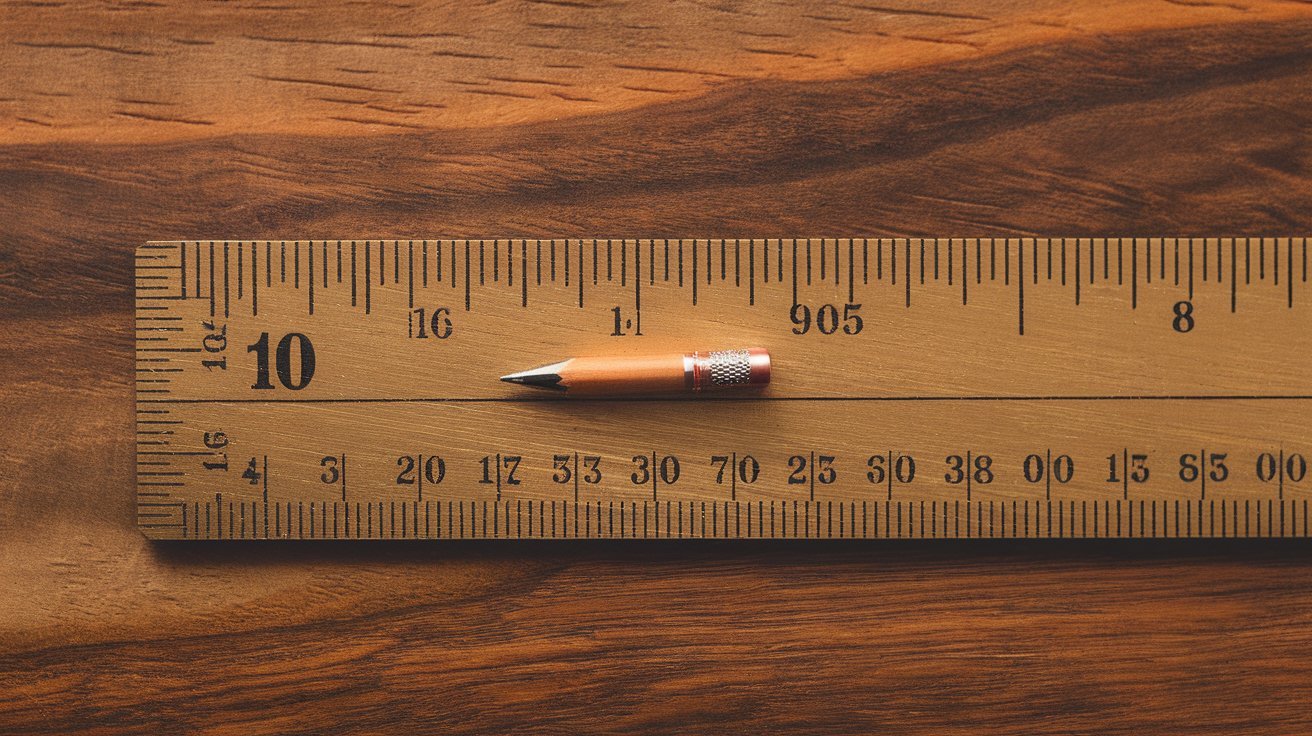
Understanding what 10 inches looks like is often more useful than simply knowing its numerical conversion. One of the easiest comparisons is a standard ruler. A typical ruler is 12 inches long, so 10 inches covers most of a 12-inch ruler, leaving only about 2 inches at the end. This makes 10 inches noticeably shorter than one foot but still fairly substantial as a length.
Another useful comparison is standard U.S. letter-size paper. The longer side of letter paper measures 11 inches, meaning 10 inches is only one inch shorter than that 11-inch dimension. This provides a convenient visual reference for people familiar with ordinary printer paper.
We can also think of 10 inches as approximately 25 centimeters, which makes it easier to visualize in metric terms. For someone accustomed to centimeters rather than inches, imagining a length slightly greater than 25 centimeters provides a practical approximation.
It is important to remember that these comparisons are only for visualization. If we need an exact measurement for construction, manufacturing, furniture placement, crafting, or another precision task, we should use an actual measuring instrument.
How Long Is 10 Inches Compared With a Hand or Ruler?
A 10-inch length can be difficult to estimate accurately using the human hand because hand sizes vary significantly from person to person. Nevertheless, an adult hand can provide a rough visual reference. Rather than assuming everyone’s hand has the same dimensions, we can use our own hand to compare it with a ruler and establish a personal reference.
A better reference is a 12-inch ruler because its dimensions are standardized. If we place a ruler on a flat surface, the 10-inch mark is clearly visible and gives us an exact representation of the length. Ten inches occupies five-sixths of a 12-inch ruler.
This comparison also helps explain why 10 inches is often described as just under one foot. A foot contains 12 inches, so the difference is exactly two inches. In everyday situations, this means a 10-inch object may appear fairly close to the length of a foot even though it is not quite that long.
How Long Is 10 Inches for Screens and Tablets?
The phrase 10-inch screen requires special attention because screen measurements are normally expressed diagonally rather than from left to right. A display described as 10 inches does not necessarily have a width of 10 inches. Instead, the diagonal distance from one corner to the opposite corner is 10 inches.
Therefore, two 10-inch displays can have different widths and heights if they use different aspect ratios. When shopping for a tablet, monitor, or other display, we should examine the manufacturer’s complete dimensions rather than relying exclusively on the diagonal screen measurement.
This distinction is especially important when determining whether a device will fit inside a particular bag, protective case, drawer, shelf, or storage compartment. A 10-inch diagonal measurement tells us the screen’s diagonal size, but it does not by itself tell us the exact exterior dimensions of the entire device.
How Long Is 10 Inches Compared With Everyday Objects?
Several familiar objects can help us understand how long 10 inches is. A ruler is one of the clearest examples, but other household items can also provide useful approximations. Depending on the specific product, a notebook, tablet, kitchen utensil, plate, or small shelf dimension may be around the 10-inch range.
However, we should be careful with comparisons because everyday objects are not necessarily standardized. A plate described as 10 inches usually refers to its diameter, while a shelf described as 10 inches might refer to its depth. A tablet described as 10 inches generally refers to its screen diagonal.
This is why the phrase “10 inches” alone does not always tell us how large an object will feel. We need to know what dimension is 10 inches. Length, width, height, depth, diameter, and diagonal measurements can all produce very different shapes and physical footprints.
10 Inches in Length vs. 10-Inch Diameter
The difference between length and diameter is particularly important. If a straight object is 10 inches long, it measures exactly 10 inches from one specified end to the other. If a circular object has a diameter of 10 inches, the measurement runs through the center of the circle from one edge to the opposite edge.
A 10-inch diameter means the radius is 5 inches. Using the circle formulas, the circumference is approximately 31.42 inches, while the area is approximately 78.54 square inches.
This explains why two objects that both contain the measurement “10 inches” can occupy very different amounts of space. A 10-inch-long narrow item and a 10-inch-diameter circular item are not equivalent in terms of width, area, or overall footprint.
When reading product specifications, we should therefore identify whether the stated measurement represents diameter, width, depth, height, length, or diagonal size.
How to Measure 10 Inches Accurately
The easiest way to measure 10 inches accurately is with a ruler or measuring tape. Place the zero mark at one end of the object and extend the measuring tool straight along the dimension being measured. Stop at the 10-inch mark.
For larger objects, a tape measure is usually more convenient. For smaller objects, a rigid ruler can provide excellent accuracy. If we are measuring a circular object, we should first determine whether we need the diameter or circumference.
For screen measurements, we should measure diagonally from one corner of the visible display area to the opposite corner if we are trying to reproduce the conventional screen-size measurement. For a product intended to fit inside a particular space, however, we should measure the overall exterior dimensions, including bezels, frames, handles, or other protruding parts where relevant.
Accurate measurement matters when ordering furniture, cutting materials, choosing storage containers, buying replacement parts, or checking whether an electronic device will fit into a particular location.
Frequently Asked Questions About How Long Is 10 Inches
How long is 10 inches exactly?
10 inches is exactly 25.4 centimeters or 254 millimeters. It is also 0.254 meters and approximately 0.8333 feet.
Is 10 inches close to one foot?
Yes. 10 inches is two inches shorter than one foot because one foot contains 12 inches.
Is 10 inches the same as 25 cm?
Not exactly. 10 inches equals 25.4 cm, so it is 0.4 centimeters longer than 25 centimeters.
How many millimeters are in 10 inches?
There are 254 millimeters in 10 inches. This follows from the exact relationship of 25.4 millimeters per inch.
How big is a 10-inch screen?
A 10-inch screen normally has a 10-inch diagonal measurement, not a 10-inch width. Its actual width and height depend on the display’s aspect ratio.
What is an easy way to visualize 10 inches?
A 12-inch ruler is one of the easiest references. Ten inches reaches most of the way along the ruler, leaving exactly two inches remaining.
How do we convert 10 inches to centimeters?
We multiply the number of inches by 2.54:
10 × 2.54 = 25.4 cm
The conversion is exact because one inch is defined as exactly 2.54 centimeters.
Conclusion: How Long Is 10 Inches?
So, how long is 10 inches? The exact answer is 25.4 centimeters, 254 millimeters, 0.254 meters, or approximately 0.833 feet.
For visualization, we can think of 10 inches as five-sixths of a 12-inch ruler or a length slightly shorter than the 11-inch long side of standard U.S. letter paper. These comparisons make it easier to estimate the size without immediately reaching for a measuring tool.
The most important point is that 10 inches describes a length, but its practical meaning depends on what is being measured. A 10-inch ruler section, a 10-inch screen diagonal, a 10-inch shelf depth, and a 10-inch circular diameter can all describe very different objects. Once we understand the distinction between these dimensions, converting and visualizing 10 inches becomes straightforward and useful for everyday measurements, shopping, DIY projects, technology, crafts, and home improvement.

Snow Chains Automatic: Complete Guide to How They Work, Benefits, and Safety in 2026

Yasmin Lukatz: Biography, Career, Investments, ICON, and Social Impact in 2026

Girl in ASL: Meaning, Sign, Fingerspelling, and Examples in American Sign Language

Zingyzon com: A Complete Guide to the Online Shopping Platform in 2026

Brett Harrelson: Everything We Know About Woody Harrelson’s Brother and His Private Life

Visual Identity for Creators: How AI Avatars and Photo Editing Are Reshaping Online Presence
 Business2 months ago
Zingyzon com: A Complete Guide to the Online Shopping Platform in 2026
- Celebrity2 months ago
Brett Harrelson: Everything We Know About Woody Harrelson’s Brother and His Private Life
- Technology2 months ago
Visual Identity for Creators: How AI Avatars and Photo Editing Are Reshaping Online Presence
- Celebrity2 months ago
Chris Cosgrove: Biography, Career, Achievements, and Lasting Legacy
- Business2 months ago
MyGreenBucks.net Kenneth: Complete Guide to the Personal Finance Platform and Kenneth Jones (2026)
- Blog2 months ago
The Blog BlueFlamePublishing: A Complete 2026 Guide for Writers, Authors, and Publishing Enthusiasts
- Blog2 months ago
About ThriftyEvents net: A Complete Guide to Budget-Friendly Event Planning in 2026
- Celebrity2 months ago
Thomas Blige: Biography, Career, Family, Legacy, and Public Interest